

Epoxy Flooring Johannesburg: What's Actually Going On With Garage Floors
More Johannesburg homeowners are choosing epoxy flooring than ever https://epoxyflooringjohannesburg.co.za/, and there's a reason those ordinary concrete garages are suddenly looking surprisingly polished. Plain concrete cracks. It gets marked and stained. It can wear down and become dusty within a year or two. Epoxy changes that, and Joburg's weather makes the investment worthwhile.
The city sits at over 1700 metres. Nights get surprisingly chilly, days can warm up rapidly, and that constant change in temperature puts stress on concrete. Add the clay-heavy soil found beneath many suburbs, and slabs can move more than people expect. A sealed floor offers considerably more protection than bare concrete.
The Concrete Underneath Matters More Than You'd Think
Nobody gets excited about grinding a floor. It's noisy, dusty, and it can take half a day before anyone even touches the epoxy. But rush this stage and the finished floor may not last. Moisture trapped under old concrete may force the coating away from the slab. Contractors who skip proper testing aren't doing anyone any favours.
A proper installer will normally perform a moisture test. If the reading is above an acceptable level, they'll improve ventilation, depending on the situation. Skip that test, and the floor can bubble and peel within a couple of winters. That kind of failure is entirely avoidable.
Epoxy Needs Time to Cure Properly
Epoxy needs time. There really isn't a shortcut. Walking on it too soon can leave permanent footprints in the finish. Driving a car onto it before the chemical reaction is complete can create stubborn tyre impressions. Nobody wants their car's tyre pattern permanently baked into the coating.
Most residential jobs need roughly 24 hours before foot traffic, and around seven days before vehicles are normally allowed back in. That week can feel like forever when your car is parked outside collecting pigeon droppings, but rushing the process can cost considerably more than waiting.
Flakes or Solid Colour: Which Epoxy Finish Wins?
Plain grey or another solid colour looks clean and understated, almost corporate. It's fine if you're after a straightforward appearance. Flake systems, where coloured chips are scattered across the wet epoxy, do a better job of hiding small imperfections. Anyone with kids or dogs tracking mud through the garage should probably lean toward a flake finish.
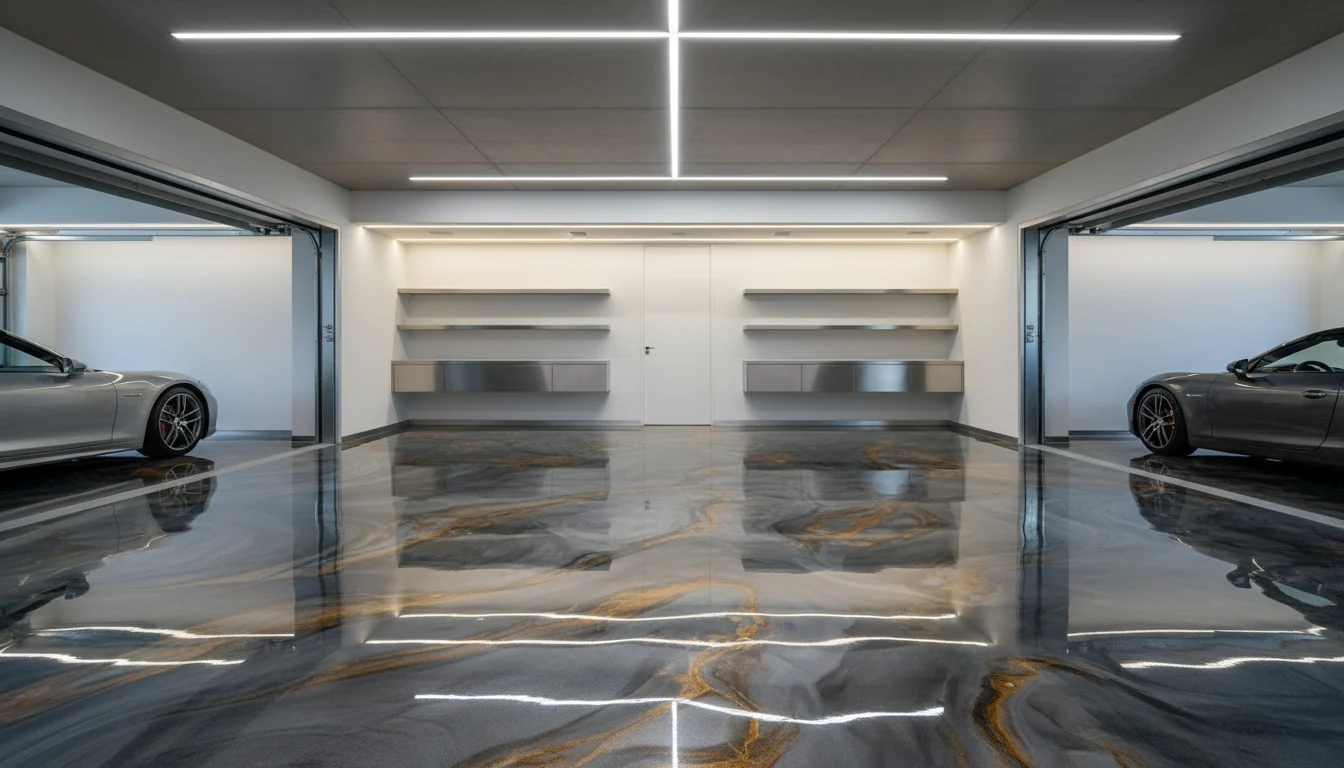
Metallic epoxy is the flashy cousin nobody thought they'd want but often becomes appealing once they see a sample. The flowing colour patterns create an appearance similar to oil floating on water. It costs more. It also can make a garage look surprisingly luxurious, which is a slightly ridiculous sentence about a garage floor.
What It Actually Costs
Prices around Johannesburg vary considerably depending on the size of the area, the state of the concrete, and the type of coating system chosen. A basic two-coat system on a small garage might come in at several thousand rand, while metallic finishes or large commercial floors can reach much higher figures. Getting several quotes is sensible. Any contractor who refuses to inspect the floor before pricing it is probably guessing, and epoxy pricing based on guesses can become expensive very quickly.
Warehouses and industrial spaces need heavier-duty systems, designed to survive industrial vehicles, heavy daily use, and demanding working conditions. A garage floor and a factory floor are completely different applications, even though both are often grouped under the broad term "epoxy floor coating."
Ask about the installation warranty before signing anything. Ask what happens if the coating peels within the first year. A contractor who is comfortable discussing warranties and potential problems has probably been through the process many times, and that's exactly the kind of installer you want working on your floor.